CCTV redaction for train operators: from incident to disclosure
A rail SAR can pull footage from three carriages, two platforms and a station concourse. The clock is one calendar month, and most of it has usually gone before redaction even starts. The friction is rarely the redaction itself. It is volume, multiple audiences and a deadline that does not stop.
Aetopia AI Redact moves the manual-masking step from days of pixel-by-pixel work to a single supervised pass: faces, plates and uniforms detected automatically, your team confirming before disclosure. The four-step path is unchanged. Gather footage from every camera that captured the incident, organise it into one library across mixed formats, auto-redact faces and identifying detail, then sign off a version before it leaves the operator. Only the auto-redact step gets faster, from days to hours. The scenarios below show where each step still bends under operational pressure.
Scenario 1: Platform incident
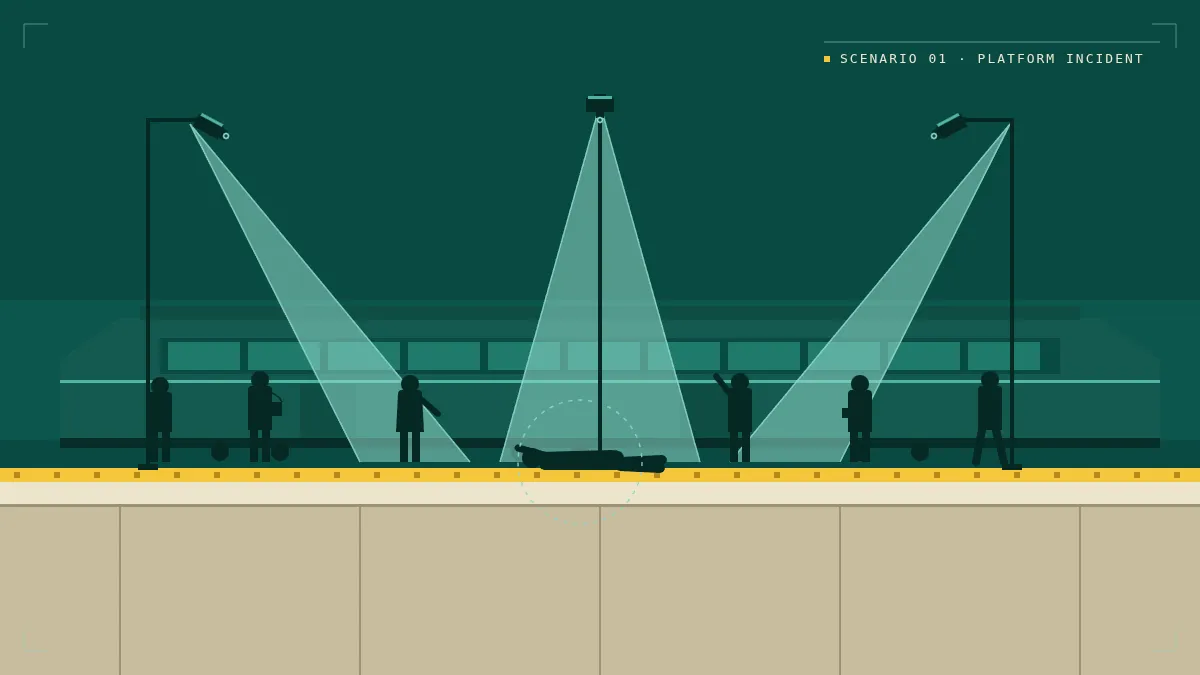
A passenger falls on a busy platform during peak hours.
What happens next:
- CCTV pulled from multiple cameras
- Footage requested by the individual, insurers, and possibly regulators
- Dozens of bystanders visible
The redaction challenge: Footage is spread across multiple camera angles, often with overlapping fields of view. Each clip contains a high number of bystanders moving in and out of frame, which makes consistent masking difficult. The volume of material and density of people increases the time required for review.
The risk point: If footage is shared too quickly without proper redaction, there is a risk of exposing third-party data. If teams delay to manage this risk, response timelines slip. Either way, the pressure lands on the team handling the request, often with limited time to resolve it properly.
Scenario 2: Anti-social behaviour on board
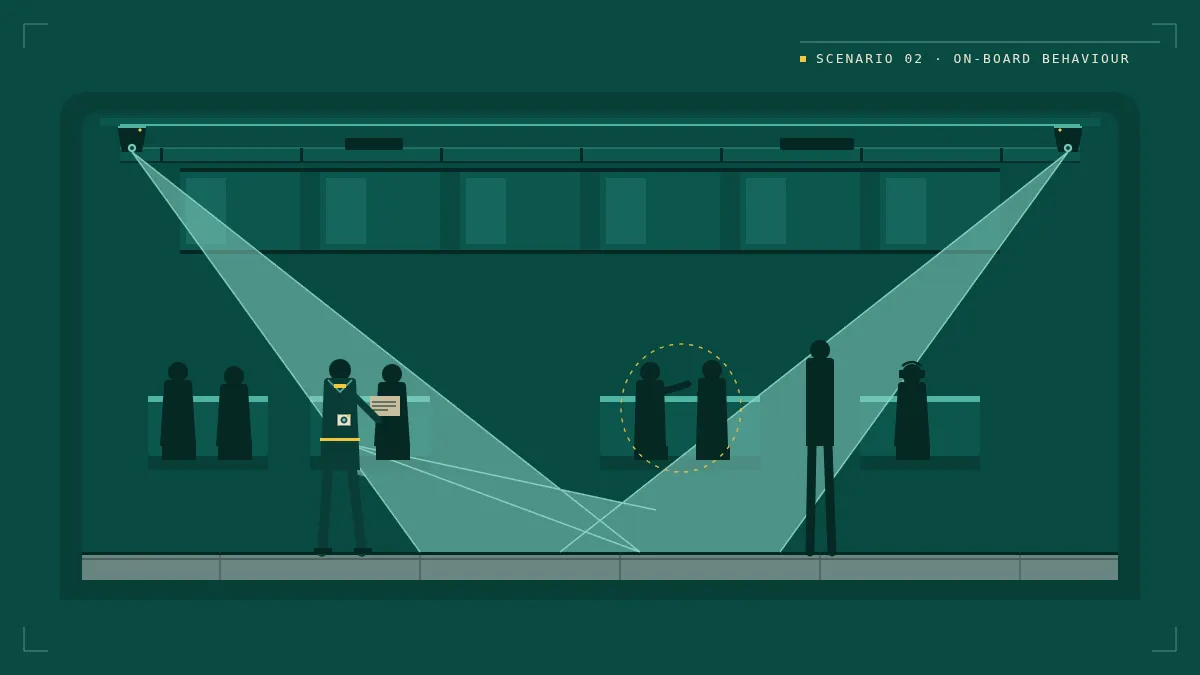
Body-worn cameras and carriage CCTV capture an incident.
What happens next:
- Footage shared with British Transport Police
- Later requested for legal proceedings
The redaction challenge: The footage typically includes multiple passengers in close proximity, often in confined spaces. Faces, voices, and personal interactions are all captured, increasing the amount of third-party data that needs to be reviewed and masked.
The risk point: Early sharing is often unredacted for speed. When the same footage is later required for legal disclosure, teams have to revisit and rework the material under tighter deadlines. This creates avoidable delay, increases the risk of inconsistent disclosure, and adds pressure at the point where scrutiny is highest.
Scenario 3: Staff investigation
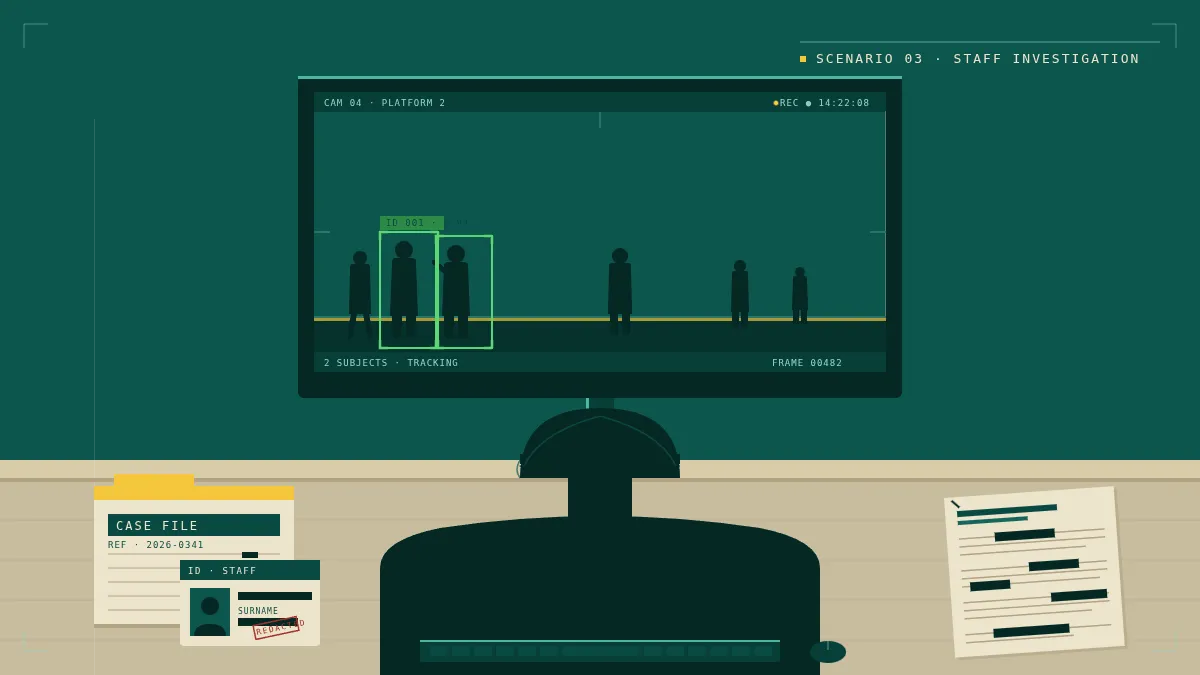
Footage used in an internal disciplinary process.
Redaction load increases because:
- Customers must be anonymised
- Non-involved staff must be removed
- Sensitive operational details may appear on screens or paperwork
The redaction challenge: Redaction requirements expand beyond faces. Customers must be anonymised, non-involved staff removed, and identifying details on screens, name badges, or paperwork obscured. The same clip often needs to be prepared in multiple versions depending on the audience.
The risk point: Different versions of the same footage can quickly become difficult to track. Without clear control, there is a risk of sharing the wrong version with the wrong audience, or losing consistency between disclosures. This becomes more difficult to manage as cases progress toward formal proceedings.
Why does all this matter?
UK rail networks handle over 1.6 billion passenger journeys a year, with hundreds of millions of journeys taking place each quarter. Even a small percentage of incidents — slips, disputes, anti-social behaviour, or staff investigations — creates a significant volume of footage that needs to be retrieved, reviewed, and prepared for disclosure.
In practice, the challenge is not the incident itself. It is what follows. Each event can trigger requests from multiple parties, including passengers, insurers, regulators, unions, and British Transport Police. The same footage is often reused across these interactions, but with different expectations each time. What starts as a simple retrieval quickly becomes a structured redaction task, with tight timelines and little room for error.
This is what operators are trying to do at each step:
- Gather every relevant frame from every camera, fast
- Organise mixed CCTV, body-worn and onboard formats into one workable view
- Auto-redact at a pace the SAR clock can sustain
- Sign off a version that holds up at every onward disclosure
Where this breaks down is consistency. Manual processes struggle when the same clip needs to be prepared multiple times for different audiences. Teams end up repeating work, carrying risk forward, or missing deadlines when volumes increase.
How Aetopia AI Redact fits
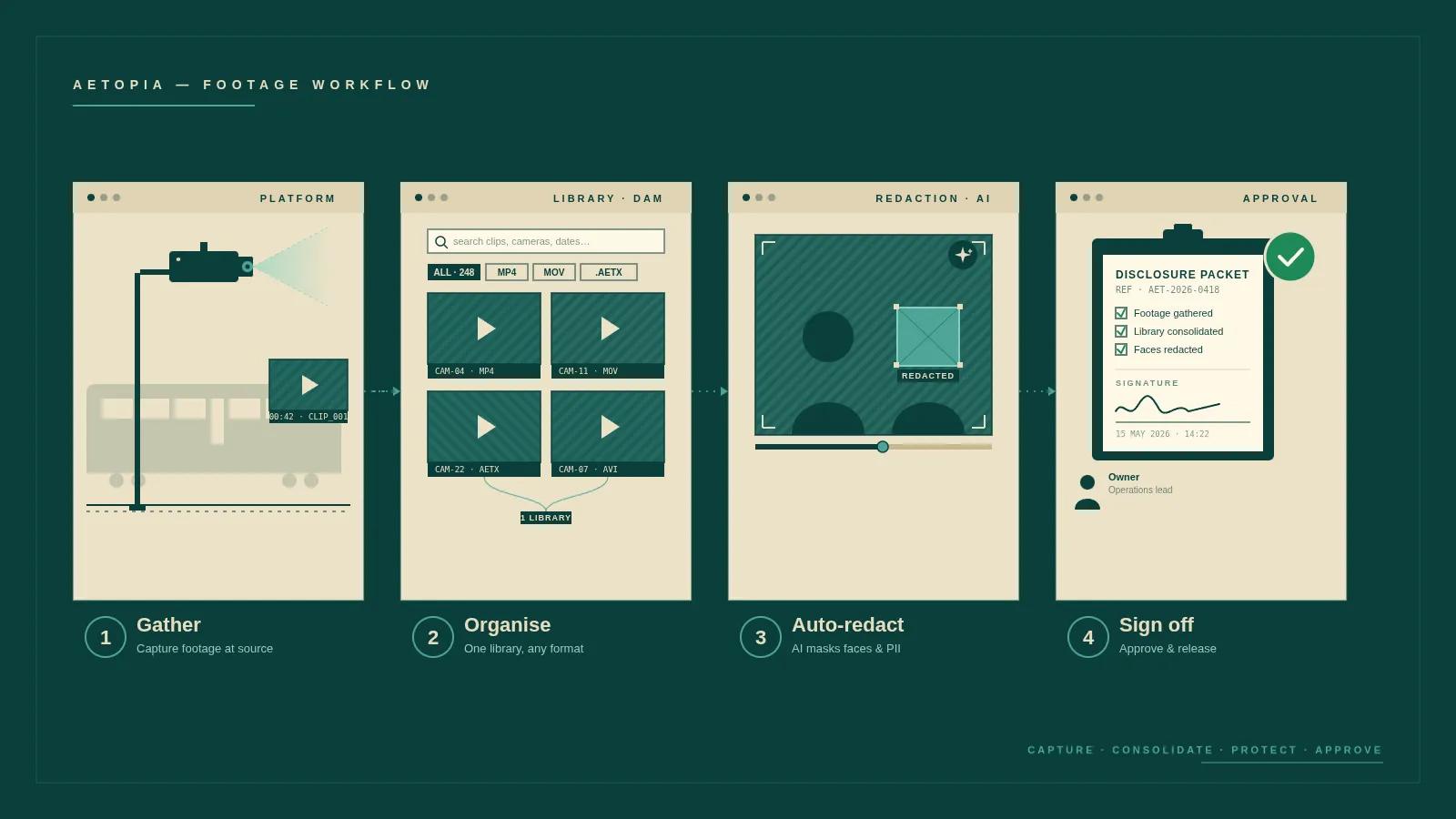
Detect, review, approve, export. One supervised pass.
AI Redact handles the scenario rail operators face every day: high camera density, multiple stakeholders, and repeated disclosure from the same source footage. Instead of producing one-off edits, teams build structured outputs for each audience from a single master clip, with detection of faces, screens and identifying details handled upfront.
That means:
- Faster turnaround for incident-related requests
- Clear separation between versions shared with passengers, police and legal teams
- A consistent audit trail of what has been disclosed and why
- Reduced rework when cases progress from operational handling to legal review
It is the same platform UK police forces rely on across millions of evidential assets, where the police-CPS-defence disclosure pattern looks structurally identical to the operator-BTP-court pattern in rail.
In rail, the goal is not just to redact footage. It is to move incidents through to resolution without creating delay or risk along the way. AI Redact supports that by making redaction part of the workflow, not a separate task that slows it down.
For the wider picture, see how Aetopia brings detection, supervised review and audited export together for transport operators.
If your team is feeling the deadline more often than it is beating it, particularly when subject access requests cluster after a major incident, talk to us about rail redaction. We'll walk through the workflow against a realistic disclosure profile for a UK train operator, in the formats your CCTV estate actually exports.
Working on a rail SAR backlog?
Tell us about your CCTV estate, your retention rules and the SAR queue that’s adding pressure. We’ll walk through AI Redact against a realistic disclosure profile for a UK train operator and show you what the workflow looks like end to end.