What the Domesday Project Can Teach Us About Digital Asset Management
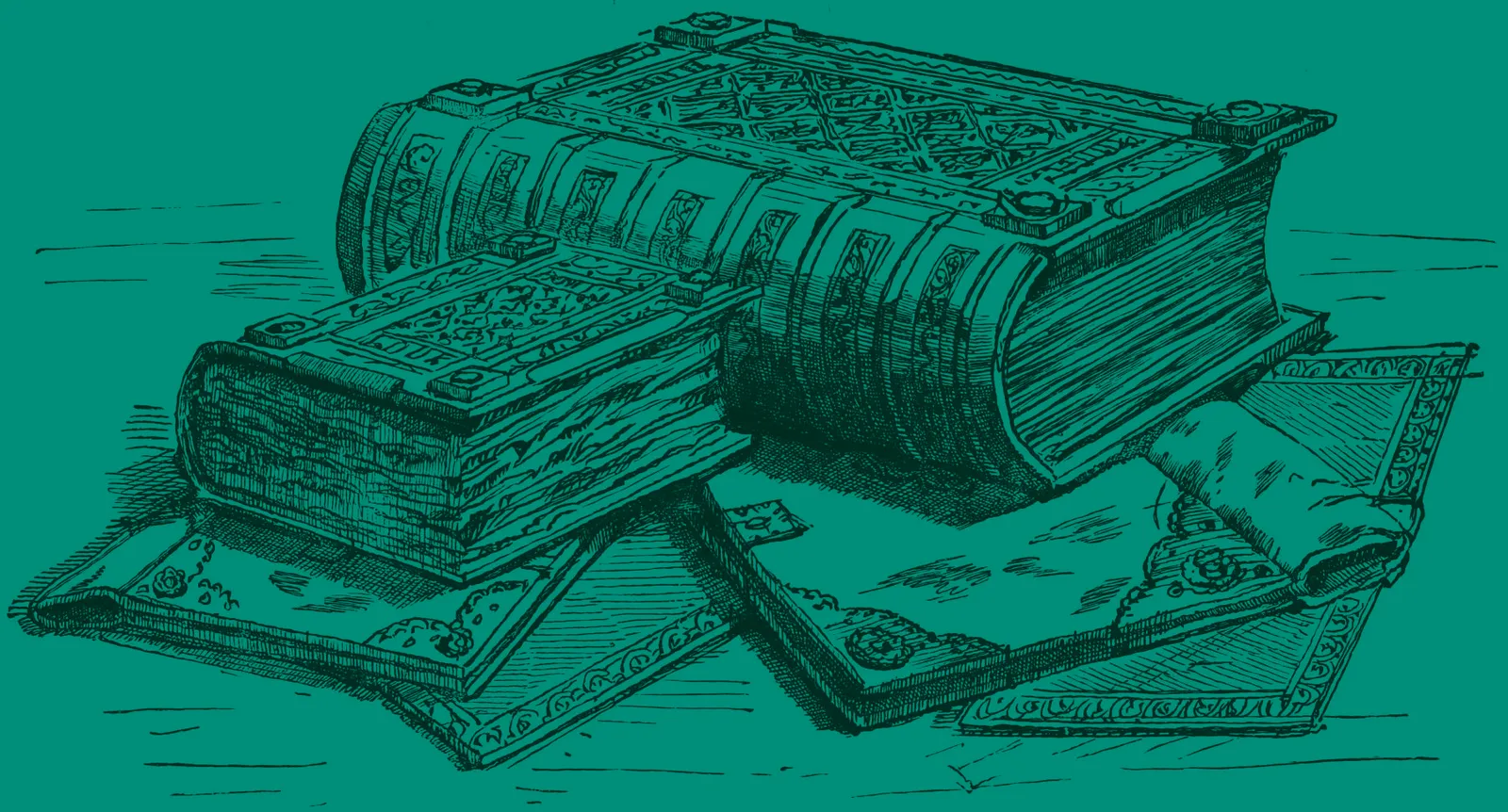
In 1086, clerks recorded England on parchment, and you can still read their work today. In 1986, the BBC recorded the United Kingdom on cutting-edge laserdiscs, and within 20 years almost no one could.
The history
The Domesday Book was created in 1086 at the behest of William the Conqueror. Its purpose was to survey most of England: the land, who held it and the dues owed to the king.
The first work of its kind in England, it contains records of more than 13,000 places, and it has since proved an invaluable source for historians exploring life in the 11th century.
Interestingly, the name came later. It was first recorded in Richard FitzNeal's Dialogus de Scaccario in the 12th century. The book was called "Domesday" because its decisions could not be overturned, like those of the Last Judgement.
The project
Nine centuries later, in 1986, the BBC set out to recreate the Domesday Book with a modern twist. This time the survey covered the whole United Kingdom and, crucially, was recorded as multimedia and stored on the latest computer technology.
It was vast in scale, with more than a million participants, including children from over 9,000 schools. Its purpose was different too. Rather than surveying a ruler's land, it aimed to capture everyday life in modern Britain, with maps, photographs, virtual walks and written accounts of people's lives.
Somewhat ironically, the Domesday Project did not live up to its namesake's longevity. It had a crucial flaw: it relied on technology that would soon become obsolete.
The BBC worked with Acorn Computers, Philips and Logica to store the material on specially adapted LaserDiscs. This was before JPEG image compression existed and well before true-colour video cards. At first the format worked well. As the years went by, however, the computers and players needed to read the discs became increasingly rare, and concerns grew that the material would soon be unreadable.
The rescue began in 2002 with the CAMiLEON project, a collaboration between the University of Leeds and the University of Michigan, which used emulation to make the old discs accessible again. It was a painstaking process. The team transferred the text and database files to a Linux-based computer and captured the images fully uncompressed.
Meanwhile, The National Archives digitised the project's original 1-inch videotape masters. The material was later published online, and in 2011 the BBC launched Domesday Reloaded, which made much of it freely available on the web. Domesday Reloaded was taken offline in 2018.
The irony of digital preservation
The original Domesday Book survived for nearly a thousand years because parchment can be read without specialised equipment. The BBC Domesday Project, despite benefiting from modern technology, nearly disappeared because it depended on a specific combination of hardware and software.
The lesson is not that digital preservation is impossible. Rather, it requires active management.
Information survives because organisations maintain, migrate and describe their collections over time. Without that effort, even material stored on advanced platforms can become inaccessible far sooner than expected.
The challenge has not gone away
Although the Domesday Project was eventually rescued, many archives today face similar challenges without the public interest or resources of the BBC behind them. Think of how many fascinating artefacts lie hidden away, without the profile of the Domesday Project, stored on obsolete systems that may become unrecoverable in the coming years.
The risks are not always as obvious as ageing media. More often, they appear in everyday collection management issues: assets spread across multiple shared drives, duplicate images stored in different locations, incomplete rights information, or vital knowledge that exists only in the heads of long-serving staff members. Many institutions also struggle to respond quickly to researcher requests or locate the material they need when collections have grown over many years.
These challenges may seem administrative rather than technical, but the outcome is often the same: valuable content that is difficult to find, understand, trust or use.
Four lessons from the Domesday Project
Fortunately, there are lessons to learn from the Domesday Project, and four stand out.
Formats age faster than collections.
A file only remains useful if it can move with changing technology. Preserving high-quality master files while generating versions for access and publication helps institutions adapt to new formats without losing the original asset.
Context is as valuable as content.
For cultural heritage organisations, metadata often becomes more valuable than the file itself. An image without creator information, provenance details, dates, rights information or collection references quickly loses research value, even if the image survives intact.
Access is part of preservation.
The Domesday material only came back to life when people could see it again. Collections that can be searched, shared and reused are the ones that stay valued and funded.
Someone has to own the plan.
Every rescue in this story happened because an organisation took responsibility. A central system, supported by clear ownership, rights and permissions, makes that responsibility manageable.
Three questions to take away
Looking to the future, we think every GLAM institution should ask itself these three questions:
1. Which of our formats would we struggle to open in ten years' time?
Think about old CDs, tapes, software-specific files and anything that relies on a single machine.
2. Who knows where everything is, and what happens if they leave?
If the answer is one person's memory or a maze of shared folders, your collection is more at risk than it looks.
3. Could a researcher, or a member of the public, find our material without having to ask us?
If not, it isn't really accessible, and material nobody can find is easily forgotten.
Preservation is more than storage
The Domesday Project reminds us that preservation is never just about storage. It is about ensuring future generations can find, understand and use the material we preserve today.
Organisations such as the Victoria and Albert Museum, the Royal Armouries and the Lee Miller Archives have all faced variations of these challenges. At Aetopia, we work with cultural heritage organisations to help organise collections, improve discoverability and create sustainable approaches to digital preservation.
If your collection contains assets spread across multiple systems, relies heavily on institutional knowledge or raises concerns about future accessibility, we'd be happy to start a conversation about how these challenges can be addressed.
Case Studies
See how heritage organisations keep their collections findable and usable.
Working on something like this?
Aetopia has spent more than 20 years helping national institutions, public bodies and enterprise teams put digital asset management to work. Tell us what you’re trying to do and we’ll get back to you within one business day.