Aetopia Evidence & AI Redact · Transport
Transport case management without the complexity.
Manage incidents, complaints, safety investigations, disclosure requests and regulatory enquiries from a single platform. Aetopia Evidence provides a structured environment for capturing information, managing evidence and maintaining a complete audit trail from initial report through to resolution.
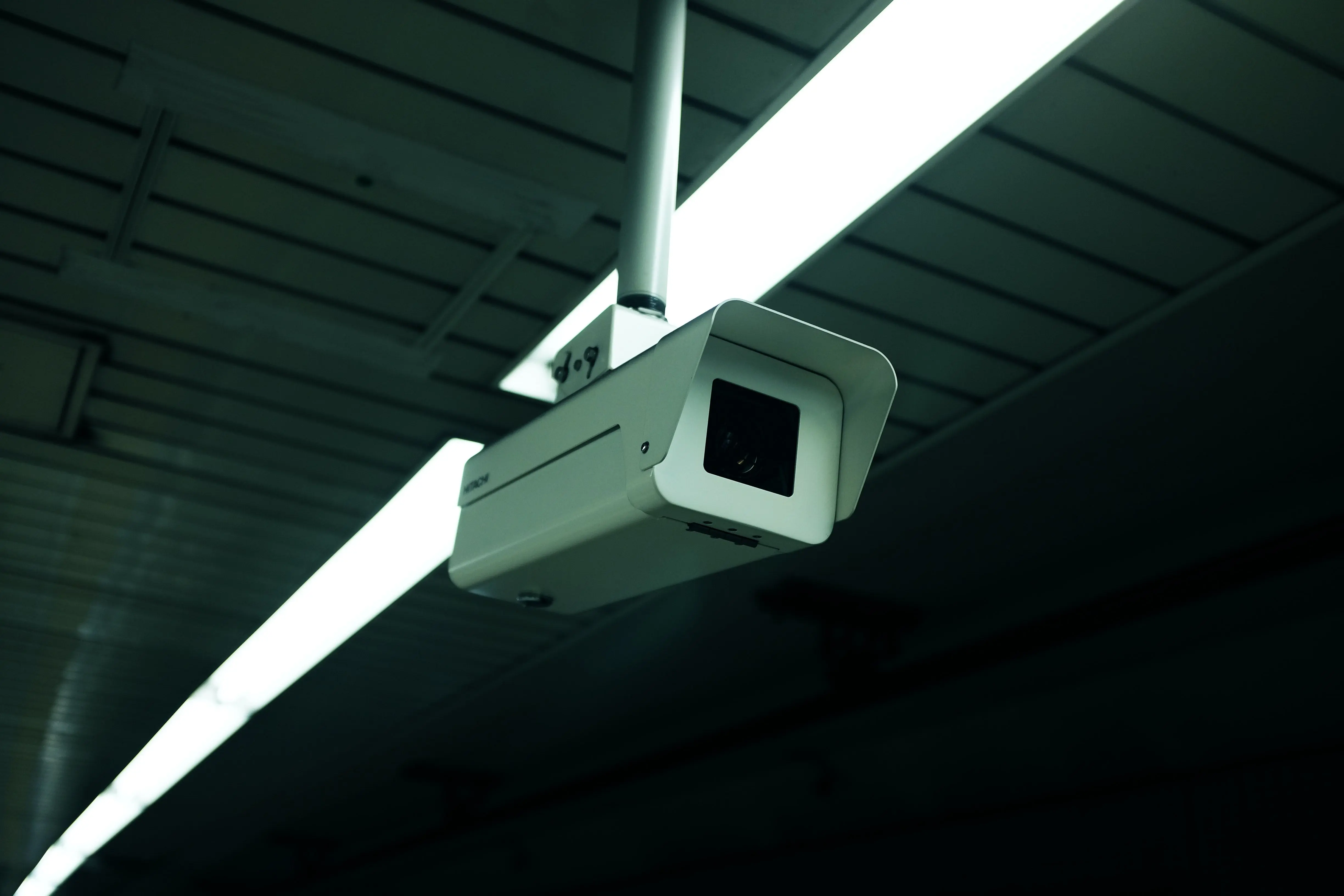
Transport case types including incidents, complaints, safety investigations, disclosure requests and regulatory reviews.
Platform for the complete case lifecycle: capture, investigate, collaborate and close.
Audit trail of activity, decisions, evidence and redaction approvals.
The reality in transport
The challenge is not collecting information. It is keeping it organised.
Transport operators manage a growing volume of information across incidents, complaints, safety investigations and disclosure requests. CCTV footage, onboard recordings, reports, correspondence and supporting evidence are often stored across multiple systems.
- Incident investigations
- Customer complaints
- Safety reviews
- Regulatory enquiries
- Subject access requests
- Freedom of Information requests
- Staff investigations
- Compliance cases
Aetopia Evidence: one platform for every transport case
From initial report to final outcome, everything in one place.
Information, evidence, tasks, communications and decisions remain connected within a single case record, providing complete visibility throughout the investigation or review process. AI Redact works directly within Aetopia Evidence to prepare video, audio and documentary evidence for disclosure.
- Centralised case information and evidence
- Single view of activity and progress
- Collaboration across operations, safety and compliance teams
- AI-assisted summaries and key insight retrieval
- Configurable workflows aligned to existing processes
- Complete audit trail of actions and decisions
How it works
From report to resolution inside one platform.
Create the case
Capture all relevant information including case type, location, individuals involved, supporting documentation and initial evidence.
Capture evidence
Add CCTV footage, onboard recordings, body-worn video, documents, emails and images directly to the case record.
Track and collaborate
Assign tasks, track actions and manage reviews in one location. AI helps surface key information and summarise larger case files.
Govern and close
Complete investigations, document decisions and maintain a full audit trail ready for regulatory review, disclosure requests and internal governance.
What changes with Aetopia Evidence
Less administration. More visibility. Better outcomes.
Faster investigations
Improved visibility
Consistent processes
Reduced administrative effort
Better governance
Complete audit trail
AI Redact for transport evidence
Sensitive information handled correctly before disclosure.
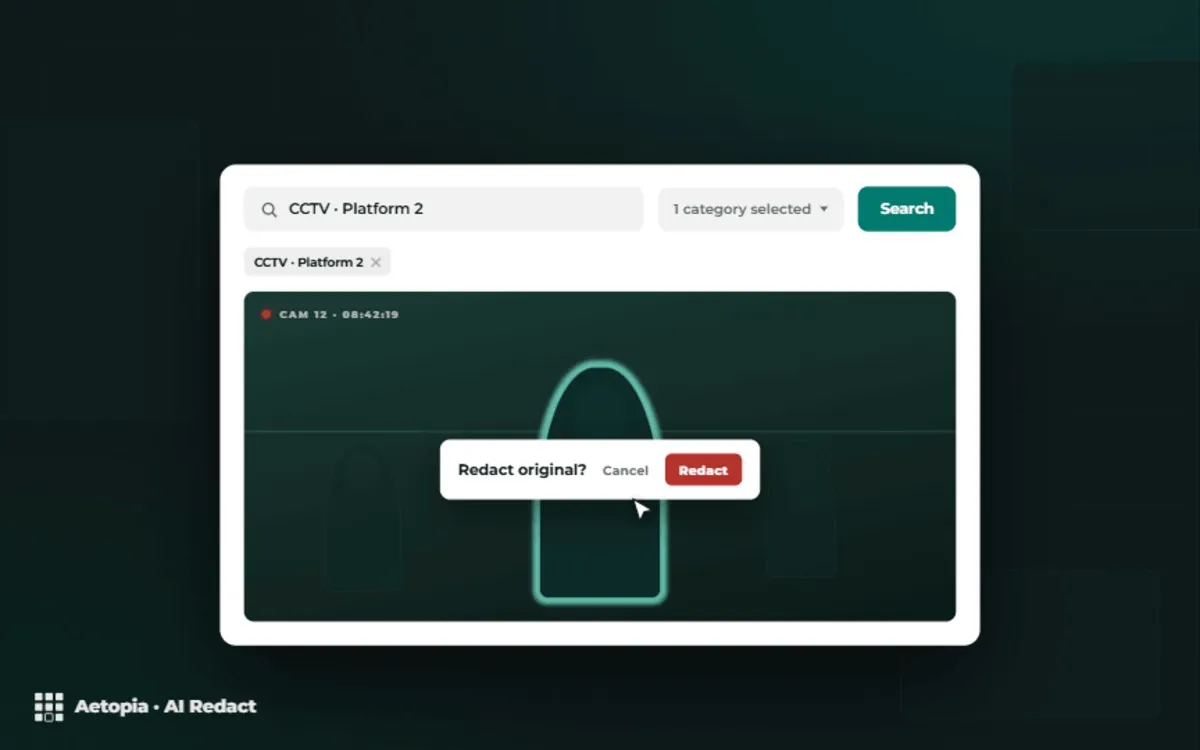
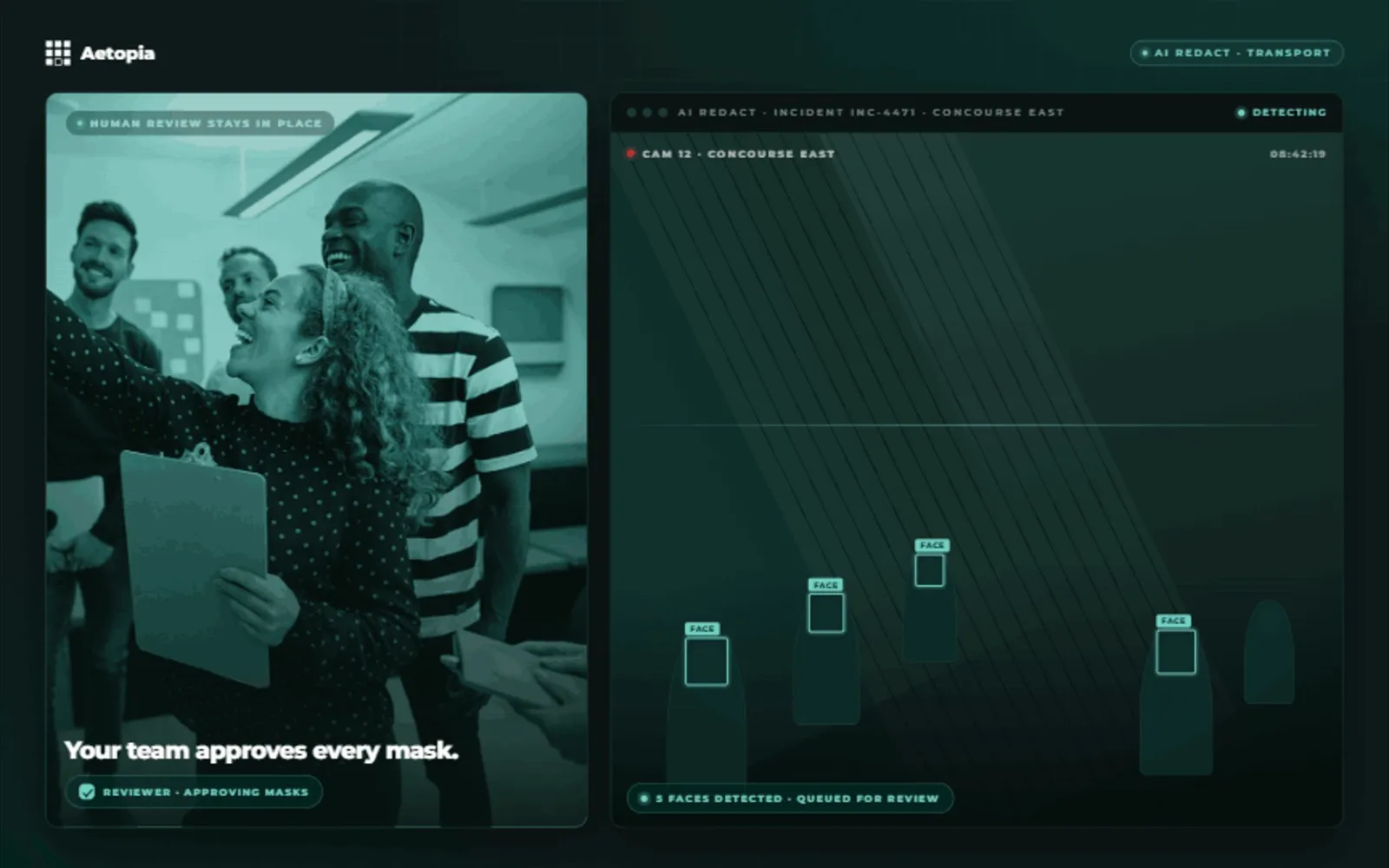
Many transport cases contain personal information that must be reviewed and redacted before being shared internally or externally. AI Redact works directly within Aetopia Evidence, automatically identifying sensitive information across video, audio, documents and images before presenting every redaction for reviewer approval.
- Faces detected and redacted automatically
- Audio reviewed and sensitive speech masked
- Documents and reports prepared for disclosure
- Reviewer approval before every export
- Full audit trail retained within Aetopia Evidence
Typical transport use cases
Any process requiring evidence management, decision tracking and auditability.
Case administration slowing your teams down?
See how Aetopia Evidence manages transport cases from initial report through to resolution while AI Redact prepares evidence for disclosure.
Frequently asked
What case types can Aetopia Evidence manage for transport teams?
What media types can AI Redact handle?
Is AI redaction accurate enough for disclosure?
Can it handle multi-camera incidents?
Does Aetopia Evidence replace existing systems?
How does AI-assisted redaction compare to manual?
See Aetopia Evidence in action for transport teams.
Managing incidents, disclosures and investigations is creating unnecessary administration.
Book a short walkthrough for transport teams and see how Aetopia Evidence manages cases from initial report through to resolution, with AI Redact preparing evidence for disclosure and information sharing.